Feel the adrenaline rush of pure
Japanese engineering excellence! For decades, Kawasaki has been synonymous with raw power and track-dominating performance, and no machine embodies this spirit more perfectly than the legendary
Kawasaki Ninja ZX-10R. Bathed in the iconic
Kawasaki lime green that has dominated racetracks worldwide, the ZX-10R is more than just a superbike; it's a meticulously crafted weapon built for maximum velocity.
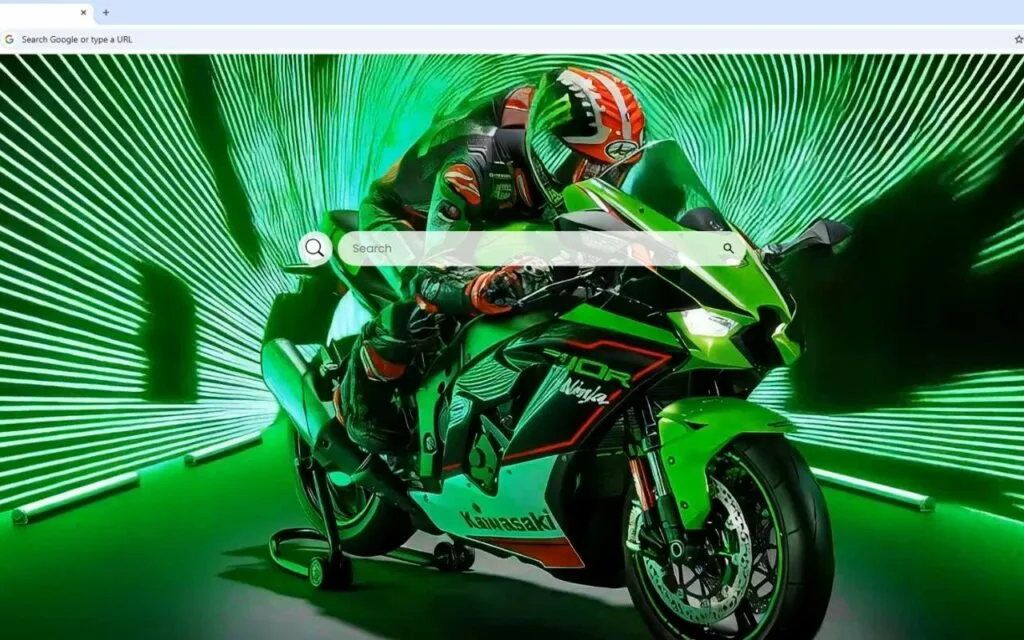
Imagine witnessing the bike in an electrifying composition, where a dynamic
light tunnel effect creates an incredible sense of speed and motion, as if you're watching the machine break through dimensional barriers at maximum velocity. This isn't just a fantasy; it's the essence captured in the viral phenomenon of the
Kawasaki Ninja ZX-10R Live Wallpaper. But what is the true story behind this superbike icon, and why does it continue to captivate enthusiasts around the globe?
🚀 The Birth of a Legend: Origin and Evolution of the ZX-10R
The Ninja ZX-10R didn't appear overnight. It is the direct successor to the Ninja ZX-9R and was born from Kawasaki's unwavering commitment to dominating the competitive
World Superbike (WorldSBK) Championship.
What is its Origin?
The original
Kawasaki Ninja ZX-10R debuted in
2004. The objective was clear: to create a litre-class superbike that combined a low weight, an ultra-narrow chassis, and a monstrous engine. The first-generation (2004-2005) model was praised for its compact size—rivaling 600cc sportbikes—and a phenomenal power-to-weight ratio. It was immediately pronounced a beast, ballistically fast, and a genuine weapon for expert riders.
The bike has undergone significant redesigns since its inception, continually integrating lessons learned on the global racing circuit:
- 2006–2007: A major makeover introduced twin underseat exhausts and a revised frame, resulting in a slight weight increase.
- 2008–2010: Another all-new version saw a dramatic angular appearance change, a move back to a single side exhaust, and improvements to its on-road usability with a longer wheelbase.
- 2011–2015: This era introduced a major overhaul, fully transforming the bike into a track-oriented machine. Crucially, the Sport Kawasaki Traction Control (S-KTRC) and the optional Kawasaki Intelligent Braking System (KIBS) ABS were introduced, marking the beginning of the advanced electronic rider aids that define the modern superbike. This generation also secured Kawasaki's first WorldSBK title on a ZX-10R with Tom Sykes in 2013.
- 2016–Present: A further major update, incorporating a Bosch five-axis Internal Measurement Unit (IMU), which refined the bike's electronic suite with features like launch control, a quickshifter, and smarter cornering ABS. The introduction of the track-focused ZX-10RR model further cemented its racing pedigree.
Why is the ZX-10R So Popular?
The ZX-10R’s popularity stems from a perfect blend of
track dominance and accessible
cutting-edge technology. Its most significant success lies in the WorldSBK Championship, where rider
Jonathan Rea utilized the Ninja to achieve an unprecedented
six consecutive Riders' Championships (2015–2020), solidifying the ZX-10R's status as a superbike legend. This relentless pursuit of racing excellence means the production model benefits directly from race-proven components and electronics. The aggressive fairings and precision-crafted wheels are not just for show; they speak to Kawasaki's commitment to delivering track-dominating performance to the consumer.
The exhilarating feeling of harnessing over 200 horsepower—made manageable by a sophisticated electronic package—is the core of its appeal.
⚡ Performance Unchained: The Technical Mastery
At the heart of the ZX-10R is a commitment to performance, where every detail, from the engine's compression ratio to the rider's aerodynamic position, is optimized.
Decoding the Powerhouse Specs
The current generation of the ZX-10R is an engineering marvel, boasting technical specifications that position it at the absolute peak of the superbike class. The professional rider in full racing leathers demonstrates the perfect racing position, showcasing the
aerodynamic perfection that makes the bike a powerhouse both on the street and the circuit.
| Feature |
Specification (Approx. Current Model) |
Significance |
| Engine |
998cc, Liquid-Cooled, In-Line Four, DOHC |
High-revving, track-proven power delivery. |
| Max Power (Claimed) |
203 PS @ 13,200 rpm |
Raw, explosive power at high RPM. |
| Max Power w/ Ram Air |
Up to 213 PS |
Boosted performance at race speeds using air intake pressure. |
| Max Torque |
114.9 Nm @ 11,400 rpm |
Strong acceleration, especially out of corners. |
| Kerb Weight |
207 kg |
Low weight aids handling and power-to-weight ratio. |
| Front Brakes |
Dual Semi-Floating 330 mm Brembo Discs |
Supreme, track-level stopping power and feel. |
| Electronics |
S-KTRC, KIBS ABS, KLCM, KQS, Power Modes, IMU |
Advanced electronic aids for safety and optimal performance. |
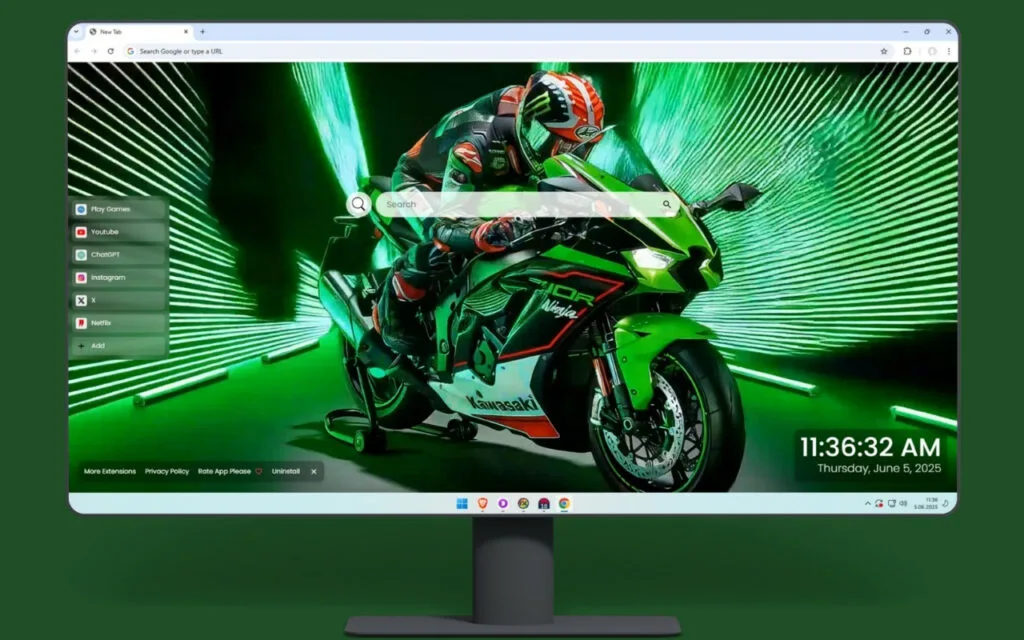
Key Technological Icons
The modern ZX-10R’s cockpit is a hub of technological integration, as visually represented by the
Kawasaki Ninja ZX-10R Live Wallpaper concept:
- ⏰ Clock and Date – Track time with infinite precision: A feature highlighting the digital TFT instrument console, which offers comprehensive, precise ride data.
- 🔗 Quick Access Shortcuts – Navigate with domain expansion efficiency: Refers to the Bluetooth connectivity via the Rideology App, allowing riders to adjust settings and check ride logs seamlessly.
- 🎮 Play Games – Find entertainment between curse battles: A playful reference to the customizable riding modes (Sport, Road, Rain, Rider (Configurable)) that allow the rider to 'play' with the bike's power delivery and electronic intervention based on the environment.
- 🔍 Search Bar – Discover knowledge across the jujutsu realms: Emphasizes the use of the new-generation TFT display and its clear, informative layout, which acts as the rider’s central source of knowledge on the bike’s status.

💡 Capturing the Speed: How to Create a Similar Decoration
The mesmerizing radial light pattern and dynamic tunnel effect seen in the
Kawasaki Ninja ZX-10R Live Wallpaper transform a static image into a portal of speed. How can you capture or recreate this electric aesthetic for your own collection or display?
The Art of Light Tunnel Photography
The light tunnel effect is typically achieved through
long-exposure photography or creative post-processing that simulates the look of speed trails.
- Photography Technique: To capture a similar dynamic light trail effect, a photographer would use a sturdy tripod and set a slow shutter speed (from a few seconds up to 30 seconds) in a dark environment like a tunnel or a busy street at night. The camera should be in Manual Mode, with a low ISO (e.g., ISO 100-200) to minimize noise. The red and white lights of moving vehicles then streak across the frame. For a more controlled, focused effect on a stationary bike, light painting with an external LED light source, combined with the multiple exposure or layer-blending technique in post-processing software, is the preferred method.
- Digital Recreation & Live Wallpaper: For digital art or a Kawasaki Ninja ZX-10R Live Wallpaper, the effect is created using a 'radial blur' or 'motion blur' filter applied to a backdrop of bright, colorful streaks. The Kawasaki lime green lighting is a perfect complement to this futuristic, almost supernatural quality, ensuring the bike remains sharp and focused while the background explodes in a blur of speed.
Tips for Collectors and Enthusiasts
The ZX-10R is not just a motorcycle; it’s a piece of racing history. For the enthusiast, owning a piece of the legend is essential.
- Model Year Significance: Earlier models (2004-2005) are prized by connoisseurs for their raw, untamed nature. The 2013 (Tom Sykes' championship year) and the 2015-2020 models (Jonathan Rea's reign) are highly sought after by collectors for their championship-winning lineage.
- KRT Editions: Look for the Kawasaki Racing Team (KRT) Editions which feature the iconic lime green livery and often come with premium components that directly reflect the factory race bikes.
- Track Use History: A bike with a well-documented racing or track-day history, especially with race-kit parts, can hold significant value, but thorough inspection is paramount.
🏁 Conclusion: The Essence of Japanese Engineering
The
Kawasaki Ninja ZX-10R represents the essence of Japanese engineering excellence. It's a machine that successfully bridges the gap between the fiercely competitive world of WorldSBK and the thrill of open-road riding. The incredible sense of speed and motion captured in the dynamic light tunnel composition is more than an aesthetic; it's a visual metaphor for the bike's entire design philosophy—a relentless, breathtaking push beyond the limits.
Are you ready to truly feel the thrill of a machine engineered to break dimensional barriers? What's your favorite generation of the ZX-10R, and why does the Kawasaki lime green livery make your heart race? Share your thoughts below!